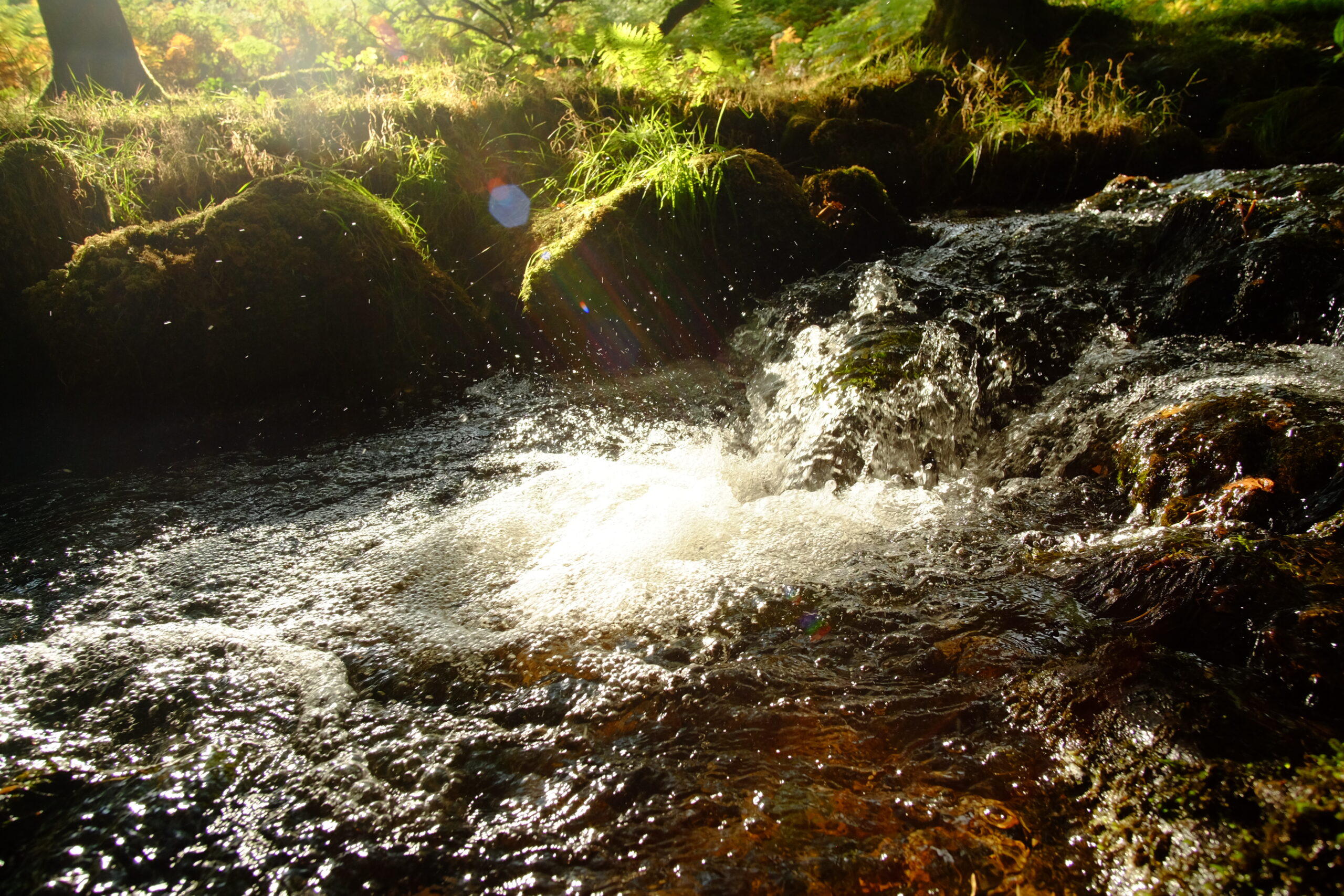

There was something lovely about following the Devonport Leat on a sunny day, when the water seemed to have nowhere particularly urgent to be and neither, for a little while, did I. The further along I walked, the more the usual noises of city life began to fade away. There were no traffic lights to wait for, no engines grumbling past, no arguments in the streets over parking spaces. Instead, there was the gentle flow of water beside the path and birdsong coming from places I couldn't always see. It felt to me as though the landscape had quietly decided that rushing was a rather unnecessary invention. Walking has a way of doing this. It moves the body, certainly, which is good for all the ordinary ways, but it also seems to give the mind a little room to breathe. Thoughts that had been bumping into one another began to spread out. Things that had seemed terribly important in the city became softer at a distance. Perhaps this is one of the gifts of walking: perspective doesn't always arrive as a grand revelation. Sometimes it simply arrives beside a stream, underneath a patch of blue sky, while a bird sings in the trees.
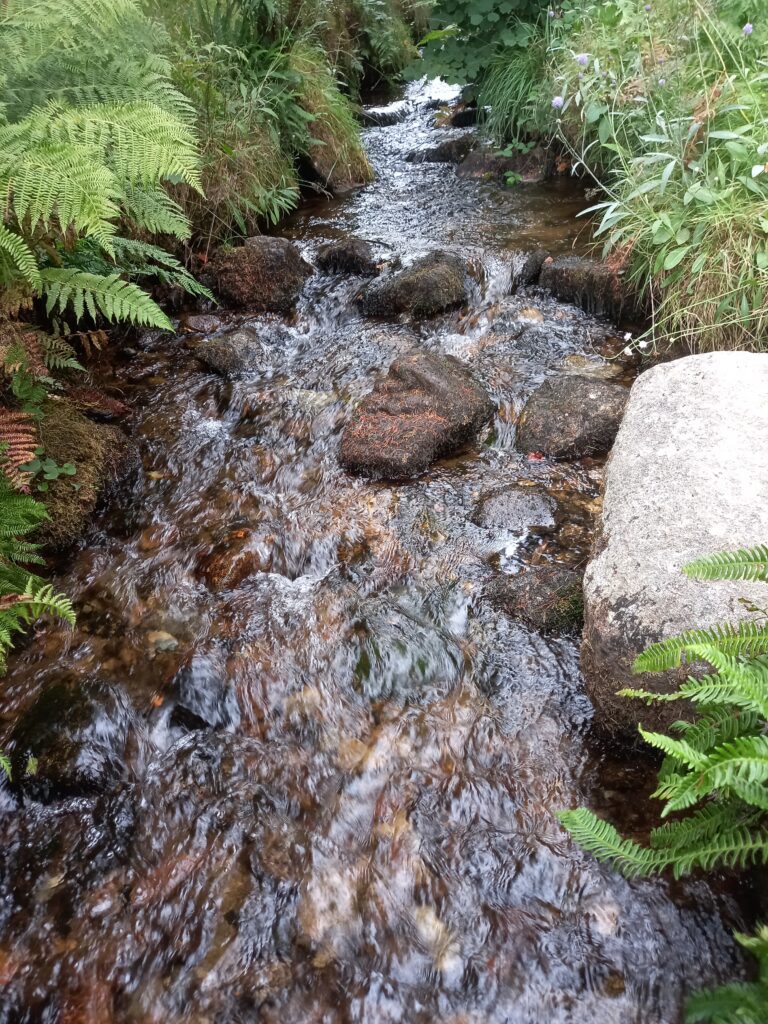
Following the leat was a joy in itself. Its gentle flow kept pace beside the path, catching rays of sunlight here and there as though it were carrying little silver secrets downstream. I found myself watching it more than I expected to, following the movement of the water and wondering how long it had been making this particular journey. There was birdsong everywhere, although the birds themselves decided that been seen was entirely optional. Every so often a song would drift across the trees, and then disappear again, leaving me wondering whether I had imagined it. Perhaps that is one of the pleasures of walking in places like this, not everything needs to reveal itself.
Walking is often described as something we do for our physical health, and quite rightly. But there is something wonderfully restorative about what it does to the mind as well. With every step, thoughts seem to untangle themselves a little. Problems don't necessarily disappear, but hey can become less enormous. Perhaps the mind needs movement just as much as the body does. By the time I had been walking for a while, I noticed that I was thinking less about where I needed to be and more about where I actually was. That seems like a small thing, but perhaps small things are rather underrated. There is a particular freedom in being somewhere that isn't asking anything of you. Away from city life, there was no need to hurry towards the next appointment or check what was happening somewhere else. The path simply continued with the water, and I could continue too.
It is easy to look at somewhere like this and simply think of it as beautiful scenery. But the longer I walked, the harder it became to see it as merely a backdrop. The water, the trees, the birds, the plants and all the tiny organisms hidden amongst them were part of something much larger and much busier than I could see. That is where words like ecology and biodiversity stop sounding like things which belong exclusively in reports and classroom. They become much more tangible when you are standing amongst them. Biodiversity is not an abstract collection of species; it is the extraordinary variety of life quietly getting on with itself all around us. There was something humbling about remembering that I was only passing through. The landscape did not need me to make it interesting. It had been busy being itself long before I arrived and, hopefully, will continue doing so long after I have gone. Perhaps sustainability begins with that realisation: understanding that we are visitors as well as inhabitants, and that the places we enjoy are worth caring for even when they can no longer speak for themselves.
Somewhere along he walk, I began to notice that my thoughts had changed. Things that had seemed rather large and complicated earlier that day felt smaller now. Not unimportant exactly, but not longer quite so determined to occupy the entire landscape of my mind. Perhaps that is another reason walking can be so good for us. We spend so much of our lives looking at things from very close up: the next task, the next message, the next problem. Walking gives us the chance to step back, both literally and figuratively. A few hours besides the leat offered a different sort of perspective, one measured not in screens or schedules but in water, trees, birdsong and miles of open space. Perhaps there is a connection between this personal perspective and the wider question of sustainability. The more closely we look at a landscape, the more we understand that it is not simply there for us, it is a living system, with its own rhythms and needs. It becomes much easier to care for something once we have taken the time to notice it.
Eventually, of course, the walk had to end. I left the leat with the sound of the water still somewhere in my thoughts, along with fragments of birdsong and the warmth of the afternoon sun. Nothing dramatic happened. There had been no great revelation waiting beside the path, no sudden answer to all the questions that life likes to leave lying around. Instead, there had simply been several peaceful hours of walking, noticing and thinking. Perhaps that is enough. We don't always need our walks to accomplish something. Sometimes it is enough to move through a beautiful place, breathe a little more deeply and remember that there is a much larger world continuing quietly around us. And when I returned to ordinary life, it seemed just slightly less noisy than before. The water had carried on flowing without me. The birds carried on singing. And somehow, I felt a little better for having stopped long enough to listen.